Thursday, November 1, 2012

Sunday, October 14, 2012
Giant Vegetables at Harrogate Autumn Flower Show
The Harrogate Autumn Flower Show, one of Britain’s most prestigious
gardening shows, took place last weekend – September 14 to 16. The show
offered thousands of gardeners, landscapers and horticulturists a chance
to celebrate this year’s successes and look forward to the new growing
season. The show featured the battle of the giants where gardeners from
across Britain show off colossal vegetable and flower crops in hopes of
earning a coveted award from the judges.

Weightlifter Jonathan Walker prepares to lift a marrow weighing 119lbs 12oz (54.3kg) above his head after it won the Giant Marrow Class in the Harrogate Autumn Flower Show. The marrow was grown by Peter Glazebrook from Newark who took six first prize awards in the Giant Vegetable classes at the show.

Giant vegetable grower Peter Glazebrook with his world record onion. It weighed in at 18lbs 1oz (8.16kg), beating his previous world record by almost two ounces. He won all six classes in the giant vegetable competition during the show at The Great Yorkshire Showground.

Peter Glazebrook wheels in his prize-winning giant cabbage, which weighs 81lb 6oz (36.74kg)

Visitors look at carrots in the Giant Vegetable competition.


Displays of seasonal fruits and prize winning apples.





Weightlifter Jonathan Walker prepares to lift a marrow weighing 119lbs 12oz (54.3kg) above his head after it won the Giant Marrow Class in the Harrogate Autumn Flower Show. The marrow was grown by Peter Glazebrook from Newark who took six first prize awards in the Giant Vegetable classes at the show.
Giant vegetable grower Peter Glazebrook with his world record onion. It weighed in at 18lbs 1oz (8.16kg), beating his previous world record by almost two ounces. He won all six classes in the giant vegetable competition during the show at The Great Yorkshire Showground.
Peter Glazebrook wheels in his prize-winning giant cabbage, which weighs 81lb 6oz (36.74kg)
Visitors look at carrots in the Giant Vegetable competition.
Displays of seasonal fruits and prize winning apples.
The Moving Island of Schiermonnikoog
Schiermonnikoog is a small island off the coast of the
Netherlands that has been continuously moving to the south and the east,
due to the combining effect of tidal current, prevailing wind and the
sea. Just 762 years ago the island lay roughly 2 km to the north of its
present position, and it had a significantly different shape. If you
work out the math, that is 2.62 meters per year, on average.
The island doesn’t actually move. The sea erodes the island at one end and deposits fresh slit on the other causing the island to shift position and assume a slightly different shape each passing day. There is not much to see in the pictures though and my searches for satellite images documenting the movement of the island drew a blank.

The name ’schiermonnikoog’ is derived from the monks who used to live on the island. "Monnik" means "monk" and "schier" is an archaic word meaning "grey", referring to the colour of the monks' habits. "oog" translates as "island". The name Schiermonnikoog therefore translates as “island of the grey monks.”
The island is small – measuring 16 km by 4 km wide and is the site of the Netherlands' first national park. The only village on the island is also called Schiermonnikoog, and about a thousand people permanently reside on the island. Because the island is small and flat, residents have to take out a special license to keep their own cars and only 200 islanders own cars here, making the few streets the island have virtually car-free.
Tourism is the main source of income on Schiermonnikoog. The island houses a campground, a ferry pier, a tidal harbour for small vessels and approximately 15 hotels and hundreds of vacation houses and apartments. Up to 300,000 people visit the island every year, staying in the 5,500 beds available in holiday homes, apartments and hotels.
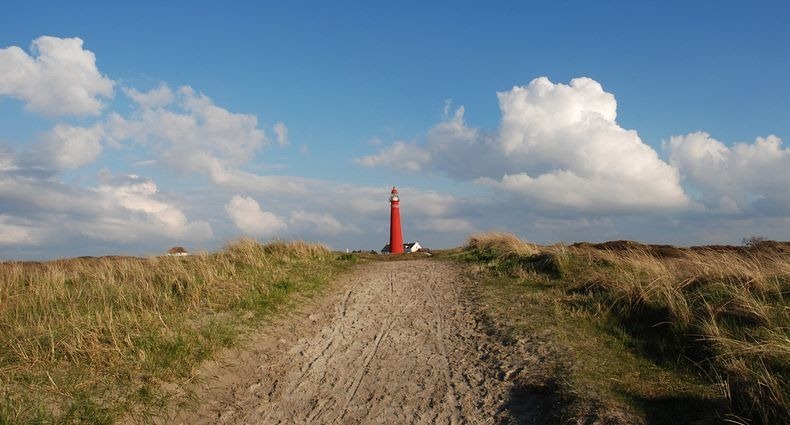
Photo credit
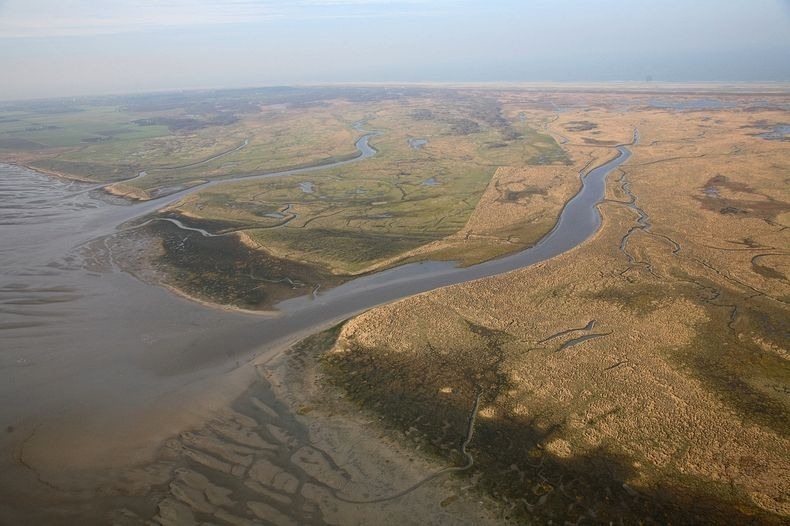
Photo credit
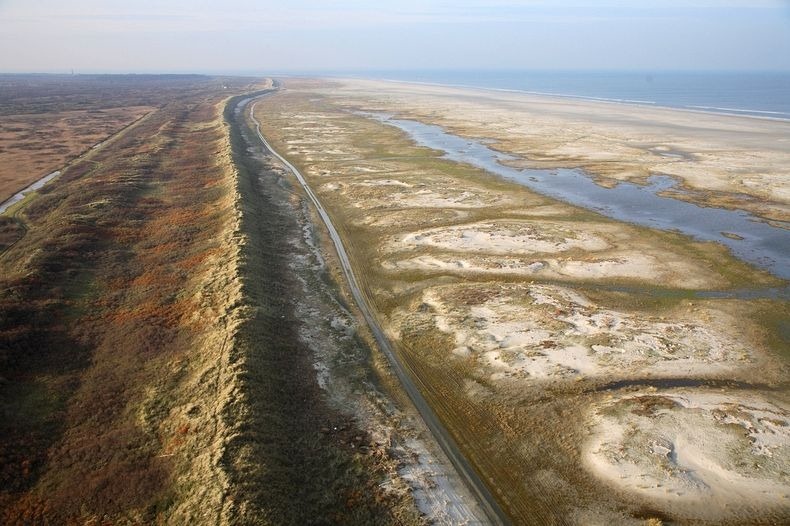
Photo credit
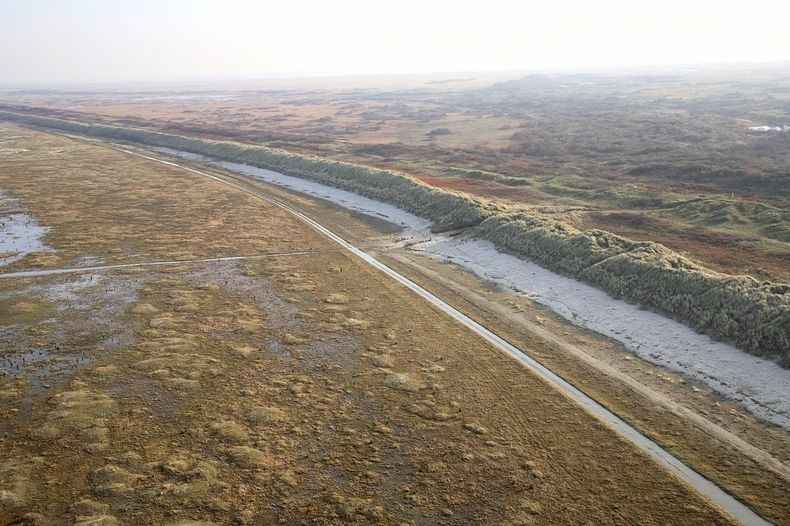
Photo credit
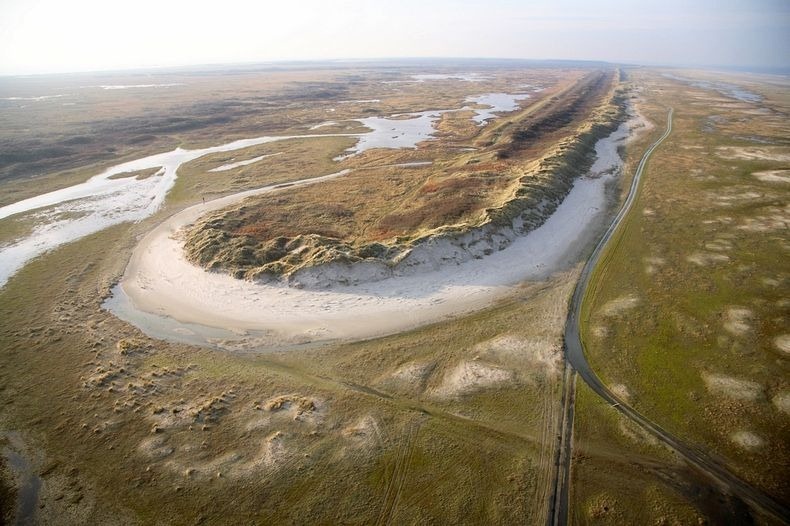
The island doesn’t actually move. The sea erodes the island at one end and deposits fresh slit on the other causing the island to shift position and assume a slightly different shape each passing day. There is not much to see in the pictures though and my searches for satellite images documenting the movement of the island drew a blank.
The name ’schiermonnikoog’ is derived from the monks who used to live on the island. "Monnik" means "monk" and "schier" is an archaic word meaning "grey", referring to the colour of the monks' habits. "oog" translates as "island". The name Schiermonnikoog therefore translates as “island of the grey monks.”
The island is small – measuring 16 km by 4 km wide and is the site of the Netherlands' first national park. The only village on the island is also called Schiermonnikoog, and about a thousand people permanently reside on the island. Because the island is small and flat, residents have to take out a special license to keep their own cars and only 200 islanders own cars here, making the few streets the island have virtually car-free.
Tourism is the main source of income on Schiermonnikoog. The island houses a campground, a ferry pier, a tidal harbour for small vessels and approximately 15 hotels and hundreds of vacation houses and apartments. Up to 300,000 people visit the island every year, staying in the 5,500 beds available in holiday homes, apartments and hotels.
Photo credit
Photo credit
Photo credit
Photo credit
Horizontal Waterfalls in Talbot Bay, Australia
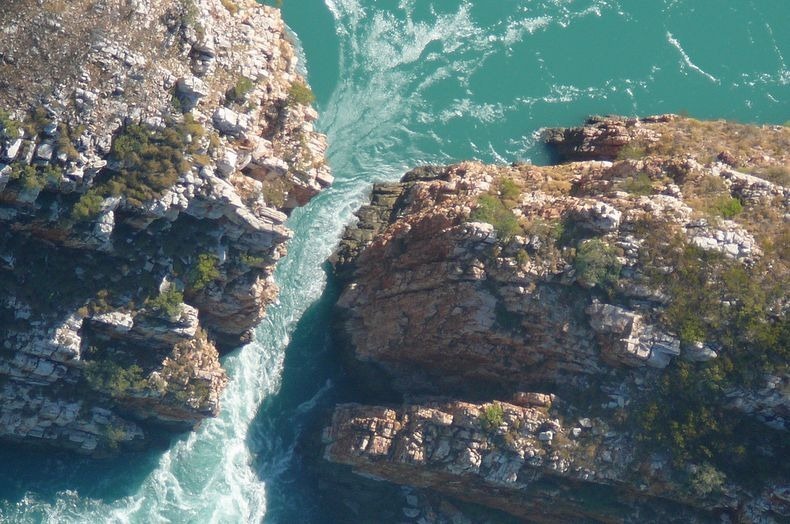
The Horizontal Falls or Horizontal Waterfalls are located in the Talbot Bay in the Kimberley region of western Australia. Although called waterfalls, this natural phenomenon actually consist of a pair of openings or gorges in the McLarty Range through which massive amount of water are pushed by tidal waves, creating temporary waterfalls up to 5 meters high. When the tide changes, so does the direction of the flow.
The twin gaps are located on two ridges running parallel approximately 300 meters apart. The first and most seaward gap is about 20 meters wide and the second, most spectacular, gap is about 10 meters wide. When the rising or falling tide occurs, the water builds up in front of the gaps faster than it can flow through them. This in turn creates an amazing waterfall effect as the water rushes through and then down to the lower levels on the other side of the ridgelines. The process is reversed and it is repeated again in the opposite direction.
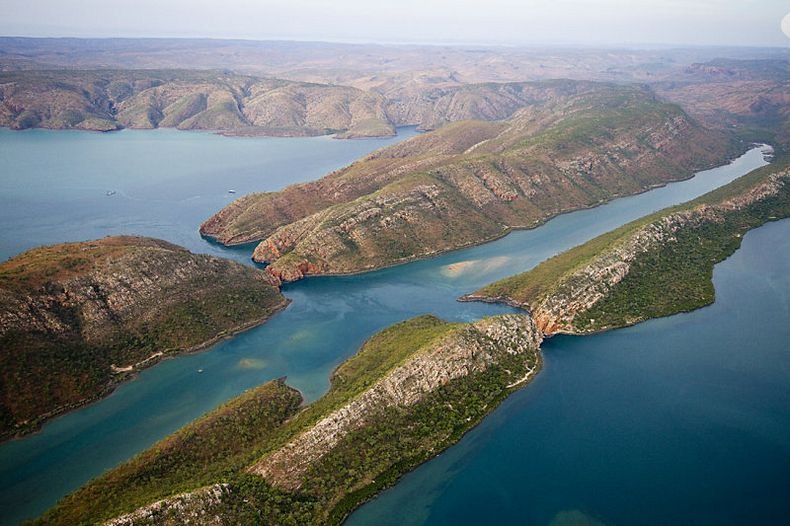
Photo credit
The tides in this area have a 10 meter variation which occurs over six and a half hours from low tide to high tide and vice versa. On a slack tide it is possible to drive boats through the two gaps to the bay behind.
The waterfall phenomena has been described by David Attenborough as "one of the greatest natural wonders of the world".
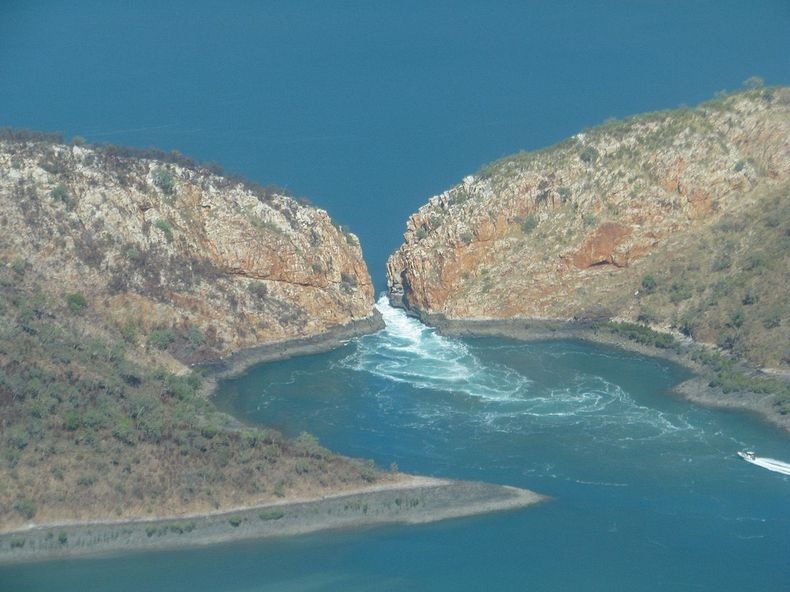
Photo credit
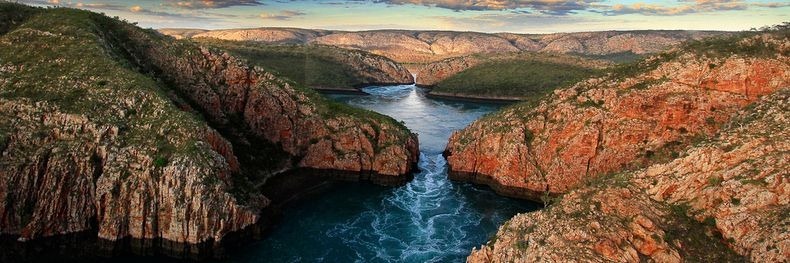
Photo credit

Photo credit
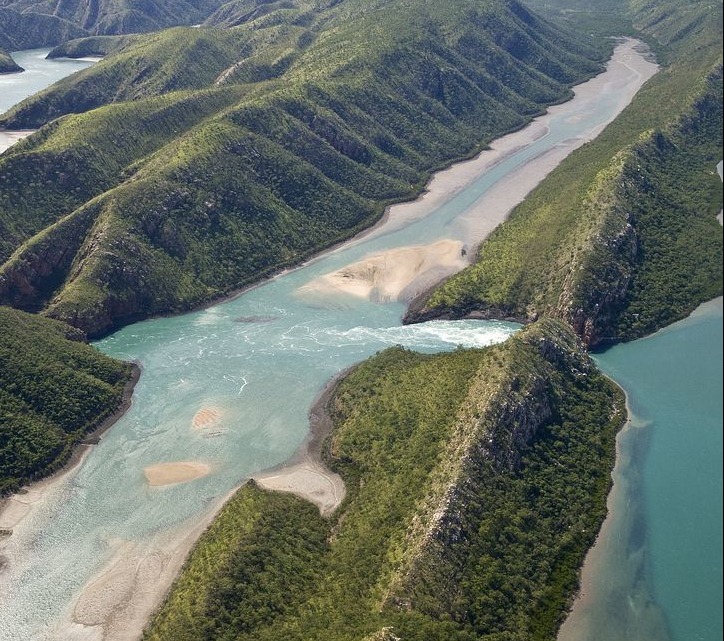
Photo credit
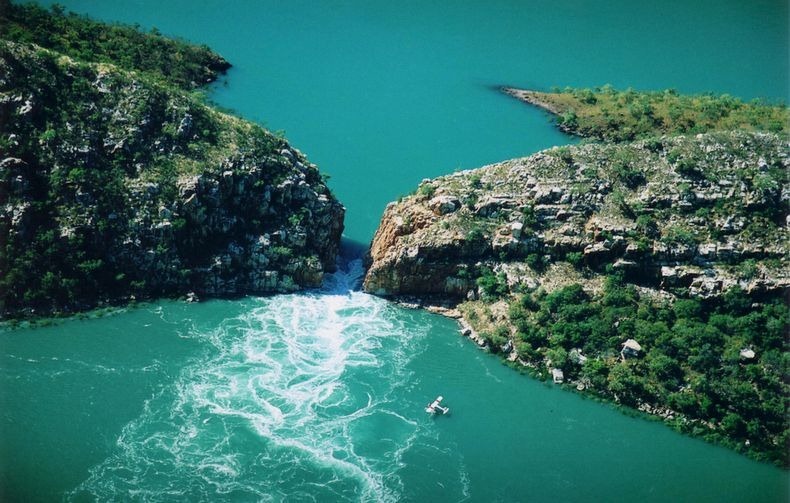
Photo credit
Terrifying Yet Beautiful Pictures of Fire Tornadoes
Terrifying Yet Beautiful Pictures of Fire Tornadoes
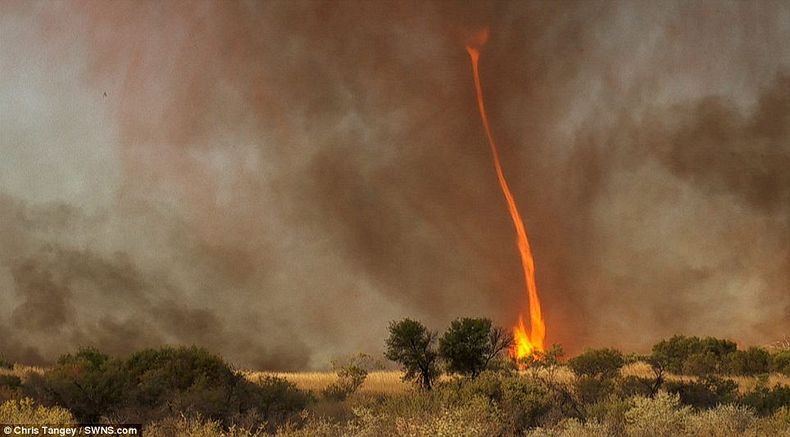
Film-maker Chris Tangey of Alice Springs Film and Television
was filming a wildfire in Curtin Springs, Australia, when a small
twister touched down causing it to build into a spinning flame. Just
300-meters away was a 30-meter high fire swirl which 'sounded like a
fighter jet' despite there being no wind in the area.
The so called fire tornado or fire whirls generally form when superheated air near the surface of a large fire zone rises rapidly in an airmass where sufficient horizontal or vertical vorticity (spin in the atmosphere) is also present. Much like a dust devil or whirlwind, the rapidly rising air above a wildfire can accelerate and turn the local vorticity into a tight vertical vortex, now composed of fire instead of dust.
Most of the largest fire tornados are spawned from wildfires. They are usually 10-50 meters tall, a few meters wide, and last only a few minutes. However, some can be more than a kilometer tall, contain winds over 160 km/h, and persist for more than 20 minutes. The tornado that Tangey caught on camera reportedly lasted for more than 40 minutes.
An extreme example of fire tornado is the 1923 Great Kantō earthquake in Japan which ignited a large city-sized firestorm and produced a gigantic fire whirl that killed 38,000 in fifteen minutes in the Hifukusho-Ato region of Tokyo. Another example is the numerous large fire whirls (some tornadic) that developed after lightning struck an oil storage facility near San Luis Obispo, California on April 7, 1926, several of which produced significant structural damage well away from the fire, killing two. Thousands of whirlwinds were produced by the four-day-long firestorm coincident with conditions that produced severe thunderstorms, in which the larger fire whirls carried debris 5 kilometers away.
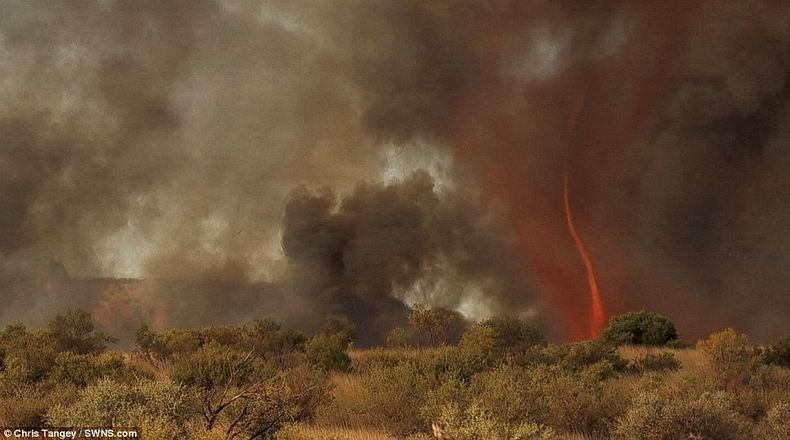
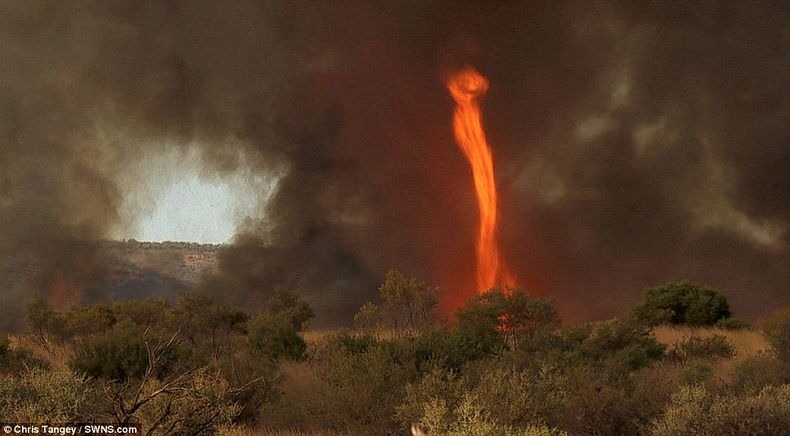
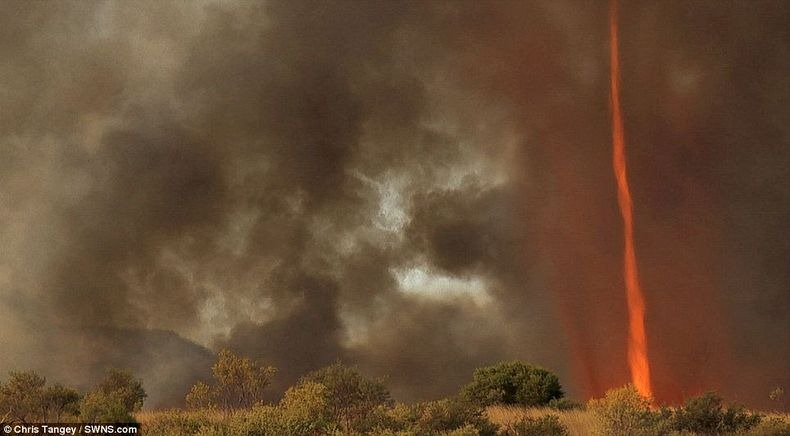
Video of the fire tornado Chris Tangey recorded below.
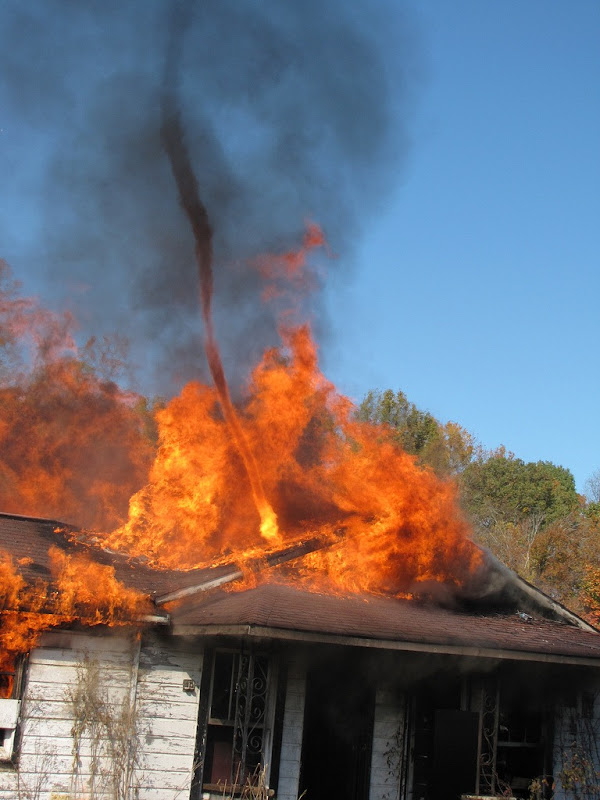
Fire tornado at a training fire Long View Fire Dept. Photo credit
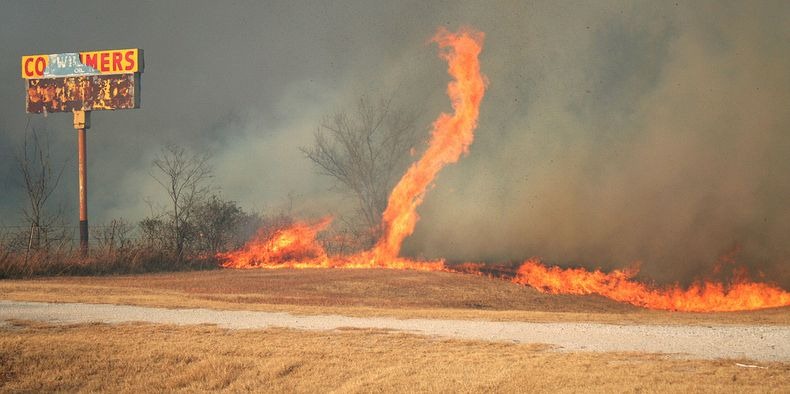
Fire tornado just south of Seminole, Okla., during the December wildfires in 2005. Photo credit

Photo credit

A popular photo of unknown origin.
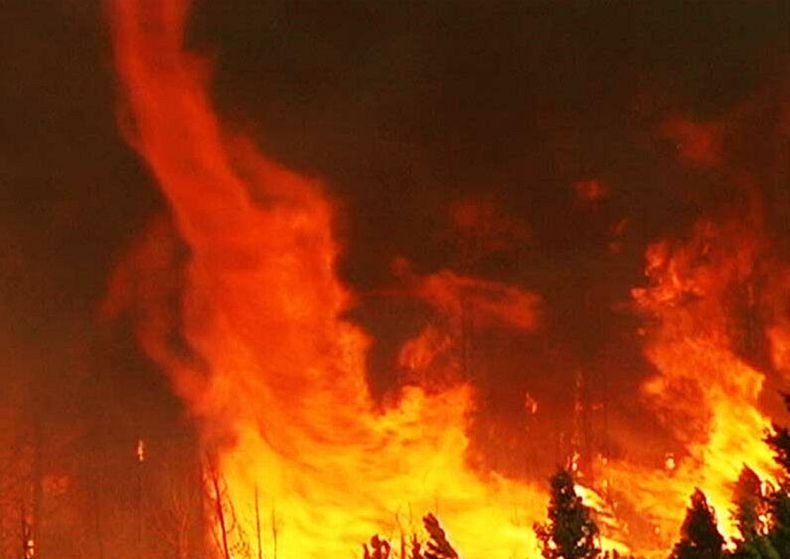
A fire tornado captured on camera on the night of 14 September 2004 near the southern Argentinean town of Ushuaia. Photo credit
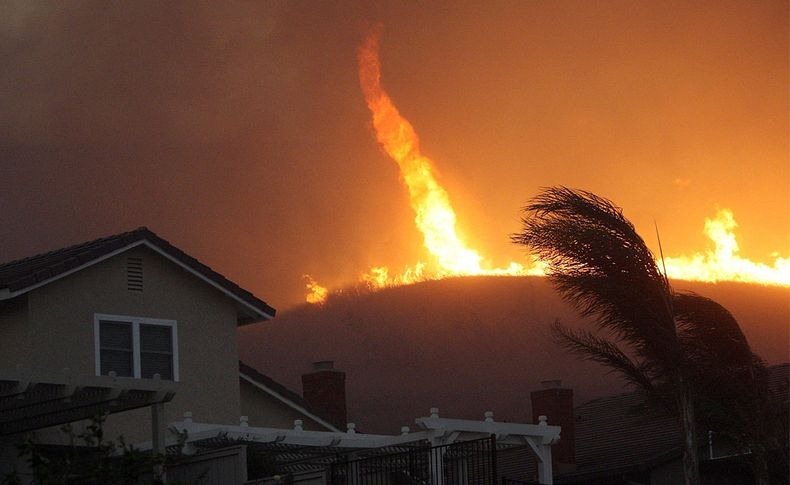
Photo credit
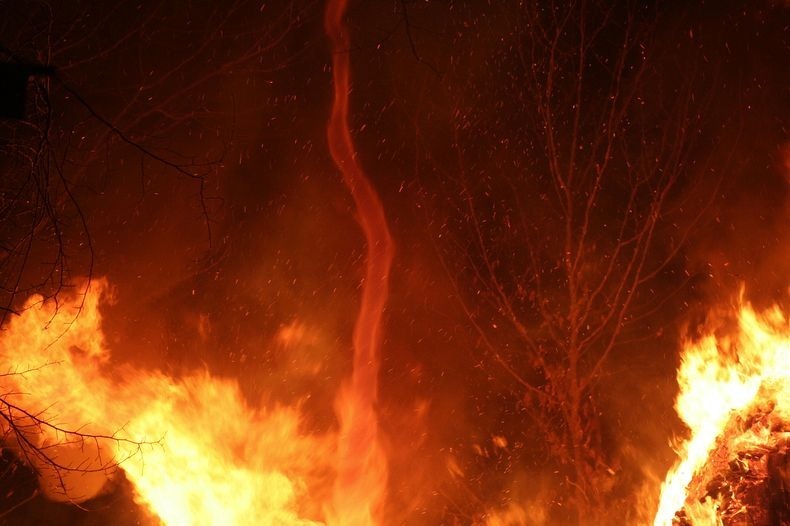
Photo credit

The so called fire tornado or fire whirls generally form when superheated air near the surface of a large fire zone rises rapidly in an airmass where sufficient horizontal or vertical vorticity (spin in the atmosphere) is also present. Much like a dust devil or whirlwind, the rapidly rising air above a wildfire can accelerate and turn the local vorticity into a tight vertical vortex, now composed of fire instead of dust.
Most of the largest fire tornados are spawned from wildfires. They are usually 10-50 meters tall, a few meters wide, and last only a few minutes. However, some can be more than a kilometer tall, contain winds over 160 km/h, and persist for more than 20 minutes. The tornado that Tangey caught on camera reportedly lasted for more than 40 minutes.
An extreme example of fire tornado is the 1923 Great Kantō earthquake in Japan which ignited a large city-sized firestorm and produced a gigantic fire whirl that killed 38,000 in fifteen minutes in the Hifukusho-Ato region of Tokyo. Another example is the numerous large fire whirls (some tornadic) that developed after lightning struck an oil storage facility near San Luis Obispo, California on April 7, 1926, several of which produced significant structural damage well away from the fire, killing two. Thousands of whirlwinds were produced by the four-day-long firestorm coincident with conditions that produced severe thunderstorms, in which the larger fire whirls carried debris 5 kilometers away.
Video of the fire tornado Chris Tangey recorded below.
Fire tornado at a training fire Long View Fire Dept. Photo credit
Fire tornado just south of Seminole, Okla., during the December wildfires in 2005. Photo credit
Photo credit
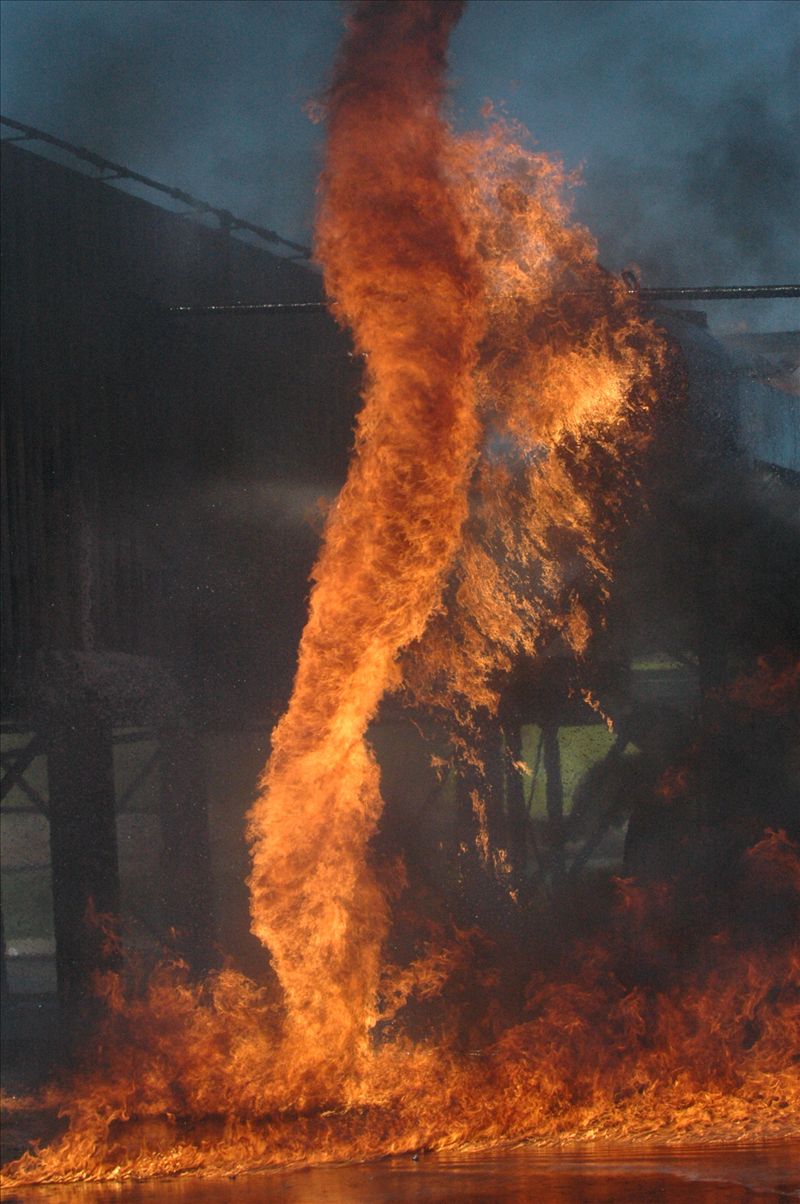
A popular photo of unknown origin.
A fire tornado captured on camera on the night of 14 September 2004 near the southern Argentinean town of Ushuaia. Photo credit
Photo credit
Photo credit

Saturday, June 23, 2012
The bee orchid
A species of orchid from Israel that looks and smells like a female bee tricks male long-horned bees into pollinating them.
Tuesday, May 22, 2012
What does it feel like to be bitten by a black widow spider?
It
was a sunny Sunday morning in the summertime of 2006 in Redwood City,
California, and the Mrs. was back East with her gal pals for a weekend
of recharging her batteries and reconnecting with old friends.
I was holding down the fort with the munchkins (boys 4 and 1 3/4), and in the interest of creating a morning diversion, we began to make preparations for a walk in the local hills. Sunscreen on, snacks loaded, water filled, stroller out - you know the drill.
I grabbed a pair of old shoes from the garage, and hastily threw them on over my bare feet, and continued my charge around the house to build momentum to get out the door. About a minute later, I realized that there was some wiggling in the toes of my right shoe, and just as I was about to take my shoe off, I felt a ***** on my 2nd toe - not painful, but a bit annoying.
I took my shoe off on the outside steps, and dumped it out, discovering a jet black inky spider with a body the size of an engorged pea. I instructed my son to grab his bug-catcher which was conveniently nearby, and I dumped the spider into the clear container for inspection.
Imagine my horror when I rotated the container and got a glimpse of a distinct reddish/brown hourglass figure on the belly of the black black spider. OK, I reasoned, I'd lived in those parts for the better part of nearly 4 decades, and I'd NEVER heard of anyone seeing (let alone getting bit by) a black widow spider, so presumably this is just a copy-cat spider that is harmless.
Well, I suppose before heading out for a walk, I ought to be safe and call the urgent care and see what they think.
After being reassured that there was "no way" I had been bitten by a black widow, the attending physician confessed that she was looking at information on Google (!!!) and started to ask me questions about what it looked like.
After 20 minutes on the phone (with the boys starting to melt down), and getting on the Internet myself, I began to experience my first tell-tale symptom -- a slight cramping in my lower right leg.
At this point, the doctor changed position entirely, and strongly recommended that I get medical attention immediately.
OK, kids, time to pile into the wagon. We're heading to the ER.
Ten minutes later, I walked through the doors at the ER at Sequoia Hospital in Redwood City, CA, with holding the hands of my two boys, along with the bug catcher.
"30 minutes ago, THIS spider, bit me on THIS toe, and now THIS leg is cramping."
The otherwise bored doctors and nurses who were numbed by their predictable flow flow of blunt trauma, heart palpitations, and other mundane dramas rapidly appeared out of the woodworks and collectively shouted a big "Yah!!!". This, they thought, was soooo cool.
Note: Capturing and bringing in the actual spider was by far the smartest thing I did all day, as it brought me instant celebrity and credibility, as the bite itself was completely and somewhat disappointingly unremarkable.
It was delicately but firmly suggested that I make some phone calls and line up some child-care, as soon I'd be all jacked up full of morphine and other things that would make me a less-than effective father.
I was able to get ahold of my neighbor friends, who gamely dropped what they were doing, and came to pick up my boys. We had a long discussion about how to orchestrate the movement of cars and carseats, including me driving their car home, which was completely naive given how F-d up I was about to become.
By now the cramping had migrated into my groin area, and I was beginning to wonder what was in store. I was told that an anti-venom does indeed exist, but it's kept in Arizona, and is highly toxic in and of itself, so they don't fly that in unless I was otherwise at risk (toddler, elderly, poor immune system). So, my fate was to get jacked up on opiates and survive the onslaught of the neurotoxin from the spider which would otherwise cause tremendous pain and cramping for the next 6 hours.
At this point I texted (SMS) my wife (who was on her way to the airport to come home from Boston): "Hey there. I'm in the ER. Got bitten by a black widow. Love ya." So much for a relaxing end to her fun getaway.
Several hours of mental bliss later, I was discharged from the ER, and picked up by my Dad, who took me to the pharmacy to pick up my meds (vicodin for pain, muscle relaxants). I was slurring words, and otherwise out of it, and happy to get home to relax.
The next 48 hours were literally a blur. I barely remember any of that time, and mentally, lost track of days and hours. It freaked my wife out when I said I thought my Mom had spent the night so I guess I was hallucinating.
We assumed at the time, that the meds were the culprit, but now later, we're pretty sure the delerium was a byproduct of the neurotoxins.
The medical literature suggests that recovery happens within 3 to 5 days. Nights 3 and 4 and 5 were complete disasters for me. For some completely unknown reason, I was sweating profusely at night. As in, literally soaking through my sheets and changing my sheets 3 times on one night and twice the next. Wet, not damp.
Specifically, I was leaking sweat out of my legs. I'd wipe them off, and they'd bead up immediately. It was freaky, to say the least.
Also, I was having trouble concentrating, or being coherent for up to 5 days. Sleep was next to impossible, and I was getting worn down. I later learned my wife was doing her own Google searches to see what the risks were of permanent brain damage. And, I think my life insurance was promptly renewed shortly thereafter.
The doctors switched me over from vicodin to valium (one makes the pain go away, one makes you not care about the pain). Finally, I got a decent night sleep on Thursday, and a good one on Friday. I awoke on Saturday morning (Day 6) feeling like a human being for the first time, and proceeded to clean the garage like a freakin' maniac.
Upon further inspection of my shoe in question, I discovered that the spider was harboring an egg sac inside my shoe. How rude of me to put my foot in there. She was actually quite restrained in waiting so long to bite me, and it turns out that these deadly creatures are incredibly passive. This is why it's so rare that a bite happens, as in fact, I discovered, these spiders are everywhere in the area where I was living.
If this happens to you, hang in there, and ride it out. You will get better, but it takes some time.
I was holding down the fort with the munchkins (boys 4 and 1 3/4), and in the interest of creating a morning diversion, we began to make preparations for a walk in the local hills. Sunscreen on, snacks loaded, water filled, stroller out - you know the drill.
I grabbed a pair of old shoes from the garage, and hastily threw them on over my bare feet, and continued my charge around the house to build momentum to get out the door. About a minute later, I realized that there was some wiggling in the toes of my right shoe, and just as I was about to take my shoe off, I felt a ***** on my 2nd toe - not painful, but a bit annoying.
I took my shoe off on the outside steps, and dumped it out, discovering a jet black inky spider with a body the size of an engorged pea. I instructed my son to grab his bug-catcher which was conveniently nearby, and I dumped the spider into the clear container for inspection.
Imagine my horror when I rotated the container and got a glimpse of a distinct reddish/brown hourglass figure on the belly of the black black spider. OK, I reasoned, I'd lived in those parts for the better part of nearly 4 decades, and I'd NEVER heard of anyone seeing (let alone getting bit by) a black widow spider, so presumably this is just a copy-cat spider that is harmless.
Well, I suppose before heading out for a walk, I ought to be safe and call the urgent care and see what they think.
After being reassured that there was "no way" I had been bitten by a black widow, the attending physician confessed that she was looking at information on Google (!!!) and started to ask me questions about what it looked like.
After 20 minutes on the phone (with the boys starting to melt down), and getting on the Internet myself, I began to experience my first tell-tale symptom -- a slight cramping in my lower right leg.
At this point, the doctor changed position entirely, and strongly recommended that I get medical attention immediately.
OK, kids, time to pile into the wagon. We're heading to the ER.
Ten minutes later, I walked through the doors at the ER at Sequoia Hospital in Redwood City, CA, with holding the hands of my two boys, along with the bug catcher.
"30 minutes ago, THIS spider, bit me on THIS toe, and now THIS leg is cramping."
The otherwise bored doctors and nurses who were numbed by their predictable flow flow of blunt trauma, heart palpitations, and other mundane dramas rapidly appeared out of the woodworks and collectively shouted a big "Yah!!!". This, they thought, was soooo cool.
Note: Capturing and bringing in the actual spider was by far the smartest thing I did all day, as it brought me instant celebrity and credibility, as the bite itself was completely and somewhat disappointingly unremarkable.
It was delicately but firmly suggested that I make some phone calls and line up some child-care, as soon I'd be all jacked up full of morphine and other things that would make me a less-than effective father.
I was able to get ahold of my neighbor friends, who gamely dropped what they were doing, and came to pick up my boys. We had a long discussion about how to orchestrate the movement of cars and carseats, including me driving their car home, which was completely naive given how F-d up I was about to become.
By now the cramping had migrated into my groin area, and I was beginning to wonder what was in store. I was told that an anti-venom does indeed exist, but it's kept in Arizona, and is highly toxic in and of itself, so they don't fly that in unless I was otherwise at risk (toddler, elderly, poor immune system). So, my fate was to get jacked up on opiates and survive the onslaught of the neurotoxin from the spider which would otherwise cause tremendous pain and cramping for the next 6 hours.
At this point I texted (SMS) my wife (who was on her way to the airport to come home from Boston): "Hey there. I'm in the ER. Got bitten by a black widow. Love ya." So much for a relaxing end to her fun getaway.
Several hours of mental bliss later, I was discharged from the ER, and picked up by my Dad, who took me to the pharmacy to pick up my meds (vicodin for pain, muscle relaxants). I was slurring words, and otherwise out of it, and happy to get home to relax.
The next 48 hours were literally a blur. I barely remember any of that time, and mentally, lost track of days and hours. It freaked my wife out when I said I thought my Mom had spent the night so I guess I was hallucinating.
We assumed at the time, that the meds were the culprit, but now later, we're pretty sure the delerium was a byproduct of the neurotoxins.
The medical literature suggests that recovery happens within 3 to 5 days. Nights 3 and 4 and 5 were complete disasters for me. For some completely unknown reason, I was sweating profusely at night. As in, literally soaking through my sheets and changing my sheets 3 times on one night and twice the next. Wet, not damp.
Specifically, I was leaking sweat out of my legs. I'd wipe them off, and they'd bead up immediately. It was freaky, to say the least.
Also, I was having trouble concentrating, or being coherent for up to 5 days. Sleep was next to impossible, and I was getting worn down. I later learned my wife was doing her own Google searches to see what the risks were of permanent brain damage. And, I think my life insurance was promptly renewed shortly thereafter.
The doctors switched me over from vicodin to valium (one makes the pain go away, one makes you not care about the pain). Finally, I got a decent night sleep on Thursday, and a good one on Friday. I awoke on Saturday morning (Day 6) feeling like a human being for the first time, and proceeded to clean the garage like a freakin' maniac.
Upon further inspection of my shoe in question, I discovered that the spider was harboring an egg sac inside my shoe. How rude of me to put my foot in there. She was actually quite restrained in waiting so long to bite me, and it turns out that these deadly creatures are incredibly passive. This is why it's so rare that a bite happens, as in fact, I discovered, these spiders are everywhere in the area where I was living.
If this happens to you, hang in there, and ride it out. You will get better, but it takes some time.
Subscribe to:
Posts (Atom)